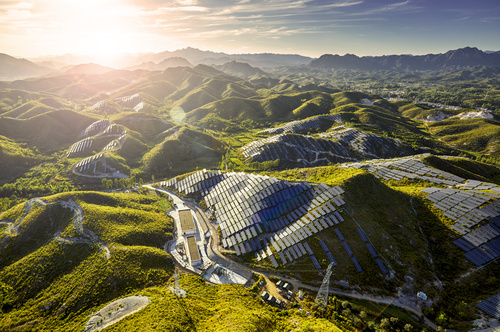
As India moves into 2026, the solar sector is entering a more mature phase marked by policy recalibration, rising energy demand, and deeper integration of storage.
While capacity additions remain strong, the focus is shifting from rapid build-out to grid-aligned, dispatchable, and financially sustainable deployment.
India’s solar growth is no longer driven primarily by upfront incentives. Central procurement through MNRE and SECI continues to anchor large-scale deployment, but state-level regulations—banking provisions, transmission charges, and grid connectivity rules—are increasingly shaping project viability.
By 2026, developers are expected to prioritize projects aligned with evolving policy preferences, including hybrid renewable parks, round-the-clock (RTC) supply, and firm power tenders. Energy-only solar bids remain competitive, but grid integration and scheduling requirements are pushing the market toward bundled solutions. Larger developers with diversified portfolios and stronger balance sheets are better positioned to absorb execution and payment risks, while smaller players face tighter margins and longer project cycles.
India added more than 30 GW of solar capacity in the first 9 months of the FY 2025-26, and renewables now account for the majority of new generation capacity additions. However, the pace of deployment is increasingly influenced by transmission readiness and system stability considerations rather than module availability alone.
Energy storage is emerging as a defining factor for solar in 2026. Battery Energy Storage Systems (BESS) are transitioning from pilot deployments to mainstream procurement, particularly within SECI and state utility tenders for hybrid and RTC supply.
Globally declining battery costs are improving project economics, and in India, storage is increasingly valued for peak shifting, curtailment reduction, and evening demand support. States with high renewable penetration—such as Rajasthan, Gujarat, and Tamil Nadu—are beginning to treat storage as a grid asset rather than a niche add-on.
While long-duration storage remains cost-challenged, 2–4 hour battery systems paired with solar are becoming commercially viable. 2026 is likely to see a significant increase in awarded and commissioned storage-linked solar capacity.
India’s electricity demand continues to grow faster than GDP, driven by industrial expansion, data centers, urbanization, and electrification of transport. At the same time, distribution companies face ongoing challenges related to fuel price volatility, capacity adequacy, and financial health.
For commercial and industrial (C&I) consumers, solar increasingly serves as a hedge against tariff escalation. Captive and open-access solar installations provide long-term price certainty insulated from coal and gas market fluctuations. Interest in group captive structures, on-site solar, and long-term power purchase agreements is expected to rise through 2026, particularly among energy-intensive sectors.
India remains one of the world’s fastest-growing solar markets, with a long-term target of 280 GW of solar capacity by 2030. While challenges persist—land acquisition, transmission bottlenecks, and DISCOM payment discipline—the underlying fundamentals remain favorable. Technology costs continue to decline, electricity demand is rising, and policy commitment to the energy transition remains intact.
Developers and investors are becoming more selective, focusing on projects with clear grid access, storage integration, and credible offtakers. This points to a more disciplined and resilient market rather than a slowdown.
Globally, solar installations crossed more than 600 GW during the year 2025, with renewables increasingly displacing fossil-fuel capacity additions, and the installations are expected to grow even further in 2026. India’s solar trajectory closely mirrors this global shift, positioning the country as a key driver of solar growth through the second half of the decade.